
GAMUT THEATRE DESIGNER SPOTLIGHTS
Gamut Theatre acknowledges the hard work and talent that each designer brings to our productions. We want to take time to spotlight some of the incredible art being made at our theatre!
DESIGNER SPOTLIGHTS: KING LEAR
Written by Erin Shellenberger (Producer)
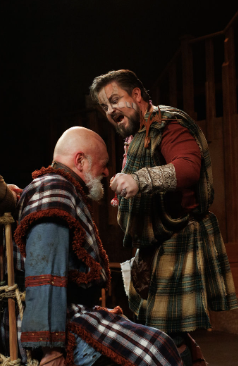
Gamut Theatre’s King Lear, directed by Thomas Weaver, drags Shakespeare’s tragedy out of courtly chambers and into a dark Iron‑Age wasteland—a world of wicker and ritual. The result is an interpretation both visceral and haunting, fusing folk horror with classic pathos to create a version of Lear that feels mythic and disturbingly human.
The visual design immediately pulls the audience into Weaver’s vision. The wooden, woven reed structure, bone masks, and furs worn like trophies conjure a pre‑civilized empire where family, power, and faith blur into raw survival. Whether it's the recitation of a letter, a conjuring ritual, a war ballet or an all out fight to the death, every scene pulses with energy.
Weaver’s concept finds poetry in ruin. Each scene feels like a ritual undone, every prop a relic of faded belief. The circles drawn on the floor evoke forces larger than any character, as if the gods themselves have turned indifferent. Even moments of tenderness—Lear’s embrace of Cordelia, Gloucester’s suffering—emerge from the same earth‑colored violence. As other critics have observed, the production’s unity of design and emotion is striking; yet onstage, it resonates as something deeply lived, not merely designed.
ANDREW NYBERG (Scenic Designer)
Core Company Member from 2015 to 2017 | Fabrication Lead at Pink Sparrow Design & Fabrication | TD for Acting Company at Bread Loaf School of English | Favorite past productions with the company include Much Ado About Nothing and Our Town
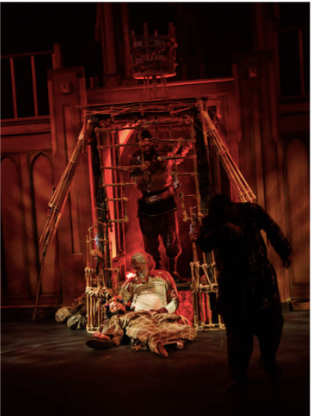
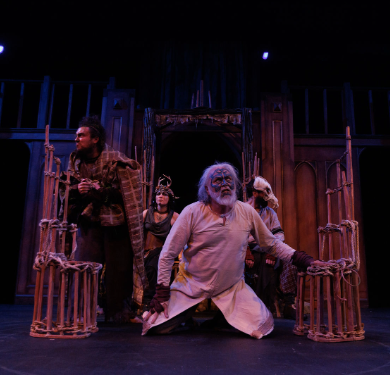
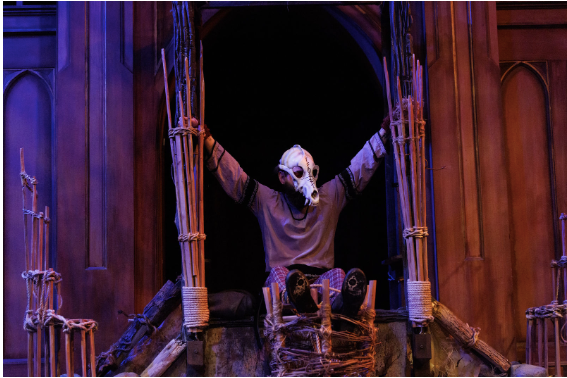
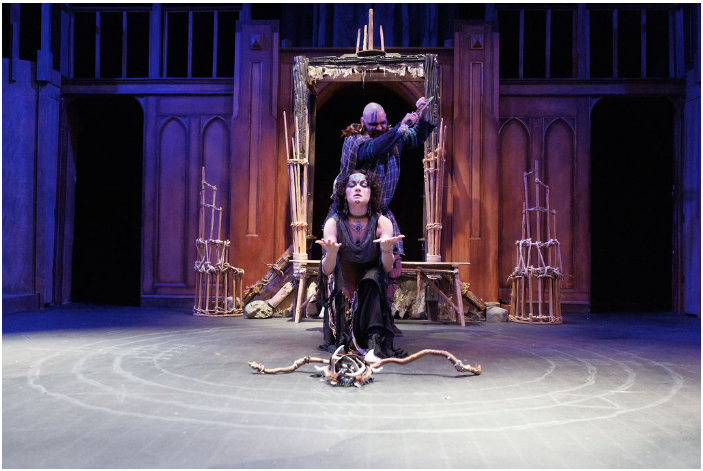
At the center of the stage stands a towering Wicker Man, built in Brooklin, NY from rough wooden slats and woven reeds. It’s not one solid structure but a collection of individual pieces that, apart, resemble crude, hand carved furniture to distinguish the separate homes and heaths where our play takes place, but when assembled, turns into a figure larger than life, giving the impression that the set itself might wake and take part in the drama. The performers move in, through and around it, sometimes climbing its frame or standing beneath its hollow chest, turning it into a constant, watchful presence; a living altar. The design captures both monument and fragility—something sacred, but on the verge of collapse and decay. As the story unfolds, the Wicker Man becomes a kind of visual conscience for the play, embodying the destruction Lear brings on himself and the society that burns with him.
“A great deal of my inspiration came from one of my favorite genres of film—folk horror.” Weaver said. “Films like ‘Midsommar’ and ‘The Wicker Man’ have greatly informed this production. It’s made for some creepy and beautiful moments!” Back to the Bard: Gamut casts an Iron Age spell with the legendary “King Lear” - TheBurg
IAN POTTER (Scenic Painter)
Core Company Member from 2010-2015 | Favorite past productions with the company include Hamlet (uncut) and the Young Acting Company’s production of Alice’s Adventures in Wonderland and Through the Looking Glass
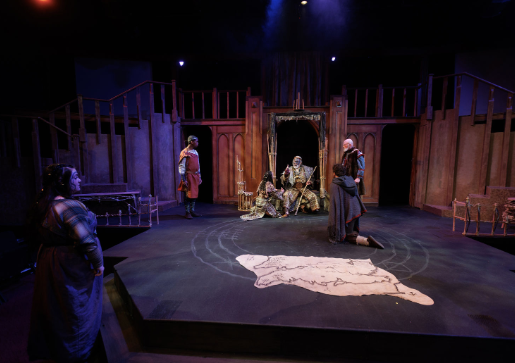
The stage floor itself plays a part in establishing the environment of the story. Its paint treatment creates the look of packed earth scuffed by use, streaked with dull grays and ochres that catch the light differently in each scene. Across this weathered ground, the audience sees painted rings, spirals, and rune-like symbols, their hand drawn outlines worn as if from ritual repetition. These markings echo the carved “letters” the characters exchange, extending the idea that meaning in this world is etched into the environment itself.
KAREN RUCH (Props Designer)
Est at Gamut Theatre in 1995 | Favorite past productions with the company include Lion in Winter, Macbeth and The Tempest.
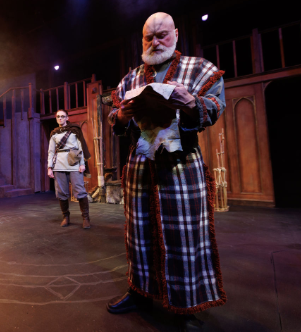
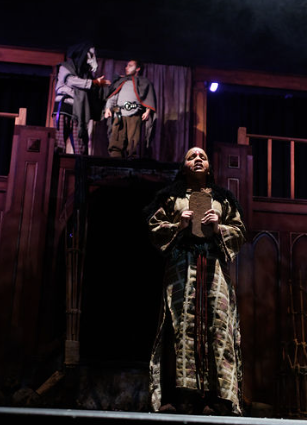
Many of the story’s turning points in King Lear depend on letters being sent, intercepted, or forged. In this production, where paper and written language have not yet been fully formed, those letters become everyday objects carved with runes and symbols. The choice makes communication feel raw and uncertain. The props throughout the show share that same handmade quality; chipped and dirt‑stained, as if dug out of the soil. Even the severed body parts used in scenes of violence are painted with unsettling realism, touched up by Ian Potter, the show’s scenic painter! While these solid props flesh out the setting, the squishier props are also of interest! Raw eggs consumed by the Fool, and eyeballs eaten by Regan to invoke a psychic vision, had to be made fresh for every weekend, much like our blood and vomit packs. Ruch’s crowning achievement hangs high above our story; we won’t get into the grisly details here, but if you saw the show, you saw that the Fool’s legacy lived on well after their death, adding a foreboding brutality that looms over the second act.
MIKE BANKS (Sound Designer)
Est at Gamut Theatre in 2000 | Interesting fact - Mike Banks designed the Select Medical Mainstage audio system! | Favorite past productions with the company include Hamlet, R.U.R, and Much Ado About Nothing
From charming morning bird song, to attack dogs and cataclysmic storms, Mike Banks audio design masterfully supports Weaver’s world building. Zayas’ compositions bridge the gap between Shakespeare’s formal language and the production’s raw, tribal atmosphere. The storm scene, in particular, leaves audiences feeling the rumbling bass of the thunder and started by the sudden cracks of lightning. In the play’s conclusion, a solitary ominous note plays as the lights dim on our burning trio.
“- sound (Mike Banks with original music by David Ramón Zayas) immerse the audience in the play’s time and place of Iron-Age Brittania.” Review: KING LEAR at Gamut Theatre
BRIANNA DOW (Blood Designer)
She previously served as the Core Company Managing Director for Gamut Theatre | Favorite blood design productions include Richard III, Titus Andronicus, and Carrie the Musical

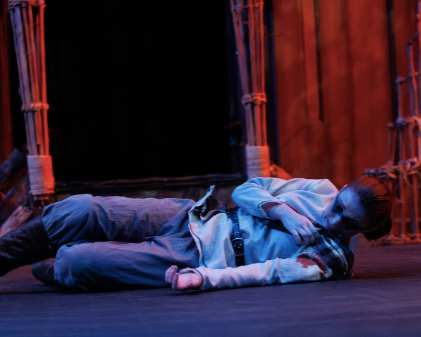
Including a Blood Designer in a production of King Lear acknowledges just how physically violent the play is. Lear’s world collapses through acts of cruelty; Gloucester’s blinding, sibling skirmishes, hangings, and suicides—and each requires realistic but controlled depictions of blood on stage. A Blood Designer ensures those moments are both safe and convincing, balancing aesthetics and logistics: where the blood pack is hidden, how the blood looks under lighting, and how it can be cleaned between performances. Beyond simple effect, stage blood becomes part of the storytelling—visual proof of the characters’ moral decay and the play’s unflinching exploration of suffering and consequence.
ELIZABETH HOOD (Fight Director)
Holds certifications in Unarmed and Knife with the Society of American Fight Directors | Previous fight work in Harrisburg includes Frankenstein at Gamut (Fight Captain), Stoney Brooke at Open Stage (Fight Director) and The Colored Museum at Open Stage (Fight Director)
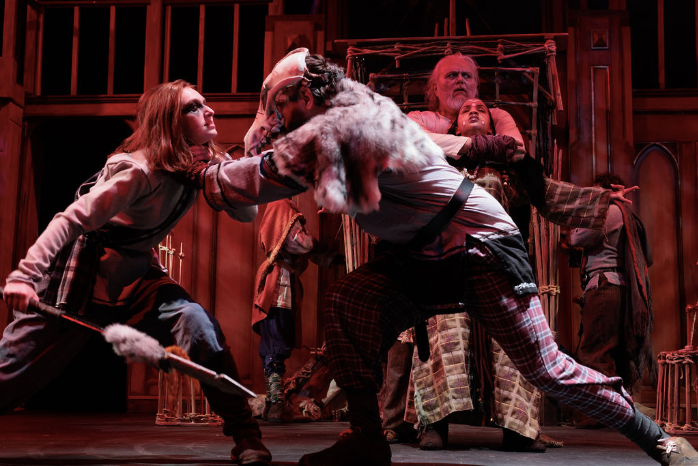
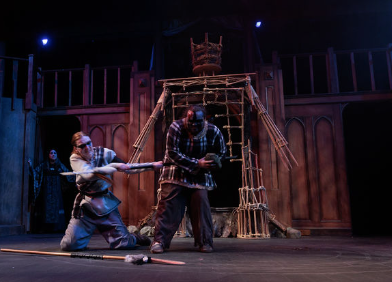
With 11 individual fights and moments of violence, Elizabeth Hood had her choreography work cut out for her. From ceremonial spears to machetes, knives and rocks, and hand to hand combat, every tussle translates perfectly from the Elizabethan text to Iron Age brawls. The brutal hand‑to‑hand confrontations and grounded physicality, staged by Elizabeth Hood, push the tragic collapse of Lear’s world into the physical realm—into muscle, breath, and blood.
“The use of movement in this production is among the best this reviewer has seen. The battle scene in particular is powerful and riveting.” Review: KING LEAR at Gamut Theatre
CALLIE LYTHGOE (Costume Designer)
Est in Harrisburg in 2025, originally from Salt Lake City, Utah | MFA from University of Arkansas | Current Lecturer in Costumes at Susquehanna University | Previous shows with the company: Ephraim Slaughter: Freedom's Witness
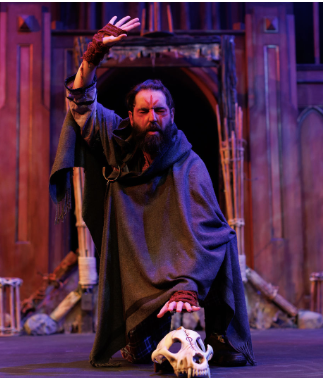
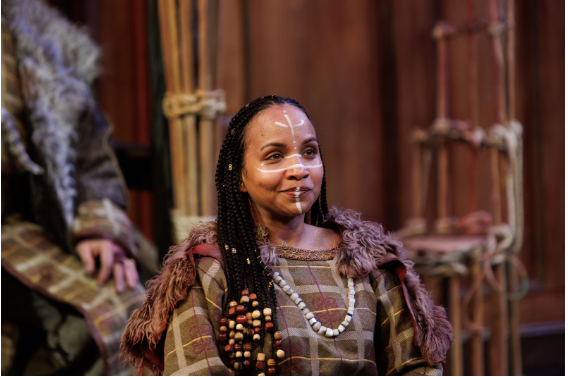
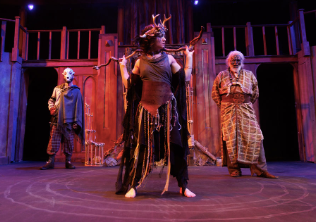
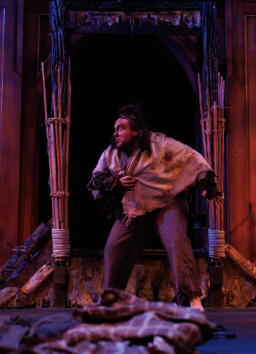
The costume design roots the production in a tactile past that predates monarchy itself. Furs, coarse linens, and painted skin replace the silks and crowns of conventional Shakespeare. Every garment looks weathered and handmade, steeped in smoke and sweat. Tartan and plaid patterns highlight tribal affiliations, while still highlighting each individual personality. The actors seem less like nobles and more like survivors—chieftains, wanderers, and spirits of another age.
TRISTAN STASIULIS (Lighting Design)
Favorite past productions with the company include Orlando, The Lion, The Witch and The Wardrobe, and All The King's Men
Quisque iaculis facilisis lacinia. Mauris euismod pellentesque tellus sit amet mollis.